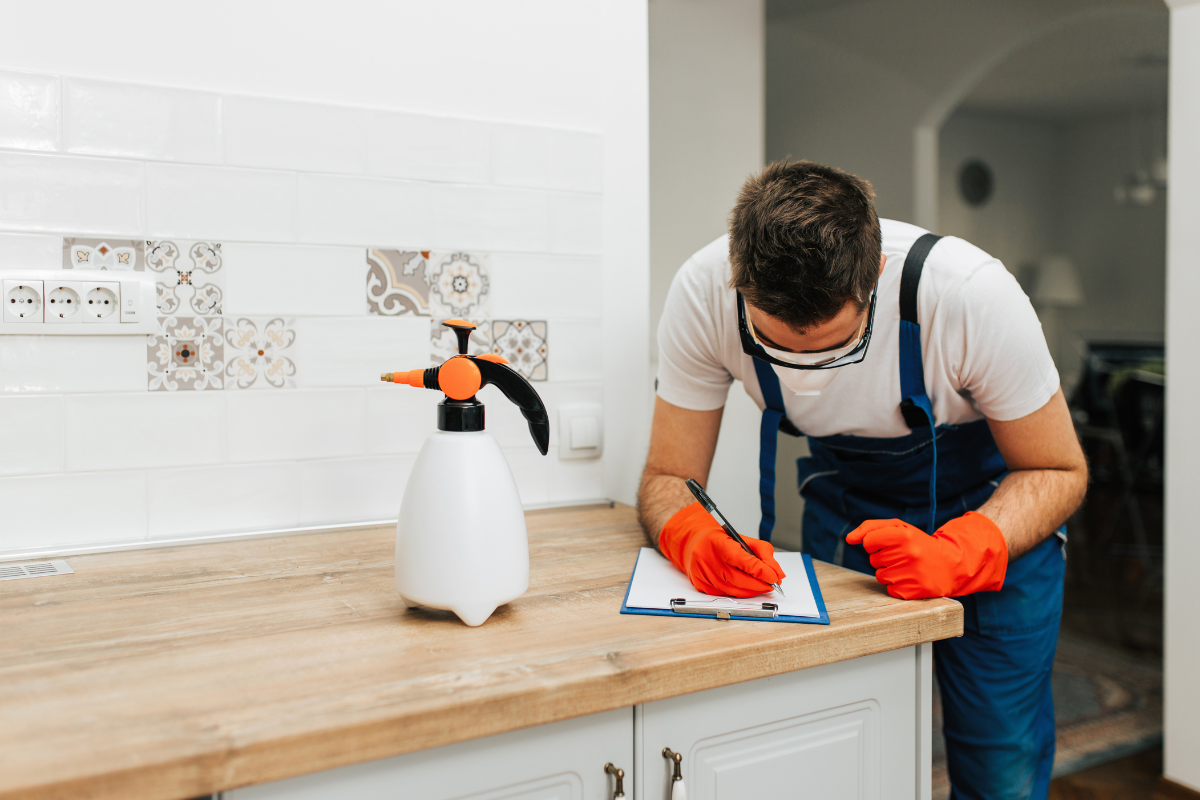
Most people call a pest control service when something starts to crawl, fly, or chew where it doesn’t belong. I understand the impulse. When rats rustle in the drop ceiling or German roaches appear in the prep line, urgency takes over. But the fastest spray is often not the best fix. The smarter path, and the one I’ve seen deliver lasting results in apartments, restaurants, schools, and food plants, is Integrated Pest Management, or IPM. It shifts the focus from momentary relief to sustained control, using inspection, data, habitat change, and targeted treatments to suppress pests with less risk and lower long-term cost.
IPM is not a product or a single technique. It is a disciplined process that starts with understanding the pest pressure on a site, then layering tactics in a way that fits the biology of the species and the behavior of the people who occupy the building. When a pest control company runs IPM well, chemistry becomes only one tool among many, not the default response.
What “integrated” really means
Integration in IPM has a specific flavor. It means you combine multiple control strategies so they reinforce one another, and you time them to break the pest life cycle. In practice, that can be as simple as sealing a half-inch gap under a warehouse roll-up door, installing better door sweeps, scheduling night sanitation to remove food residues before cockroach foraging peaks, and then setting insect growth regulator stations where juvenile roaches harbor. Each action removes a resource the pest relies on, and the overall effect outpaces what any single tactic could achieve.
It also means your pest control contractor does not treat blind. They scout, identify the species, and measure activity before prescribing solutions. Carpenter ants, Pharaoh ants, Argentine ants, and odorous house ants all respond differently to baits, residuals, and moisture changes. Misidentification leads to wasted money or worse, colony budding and expansion. I’ve walked into accounts where DIY sprays had chased Pharaoh ants into six new voids. That cleanup took months. A patient baiting strategy, paired with heat mapping for moisture and food source control, would have solved it faster.
Thresholds change the conversation
IPM hinges on action thresholds. In a hospital ICU, one fly in a patient room triggers intervention. In a grain elevator, odd beetles around loading bays may sit below the threshold if pheromone trap catches stay within tolerance and no product shows damage. Thresholds make pest control measurable and defensible. They keep teams from over-treating because one scout happened to have a bad inspection day.
Agreeing on thresholds also aligns expectations with the client. A restaurant might accept that an occasional pavement ant shows up at the patio perimeter in spring, provided interior monitors remain clean. A school district may demand zero mice in classrooms, but permit limited exterior baiting around fields. The exterminator service that leads with thresholds sets itself apart, because it signals accountability and a plan grounded in data.
Inspection is the engine
Every strong IPM program begins with an inspection that reads like a crime scene walk-through. Where would a rat find water? What ledgers, conduits, or vines connect the landscape to the roofline? Which doors stay propped open for deliveries, and for how many minutes after dark? I train techs to sketch as they go and to think in three dimensions. Many infestations hide in voids, under equipment, or in the narrow gap behind a walk-in refrigerator where grease aerosols can build for years. A flashlight, a small mirror on a telescoping handle, and a harboring mindset change what you see.
In multifamily housing, we look for travel routes. Smudge marks about an inch off the floor indicate rodent runs. Roach spotting often appears as pepper-like flecks on hinges and cabinet corners. A single bed bug cast skin in a baseboard seam is a warning flag, not a mystery. In food plants, we check floor drains, dock plates, truck wells, and the seams of corrugated carton stacks for stored product pests. The best pest control companies photograph evidence, tag it by location, and compare over time. Patterns tell you whether a treatment is working.
Exclusion: the unglamorous winner
Exclusion is the quiet hero of IPM. You can’t trap every mouse if the building keeps inviting new ones inside. Modern construction leaves small but meaningful pathways: expansion joints, pipe penetrations, conduit chases, and roof-to-wall transitions. Mice need a quarter-inch; cockroaches like a crack the width of a credit card; larger rats can compress through half-inch gaps. When we gap-map a building, we annotate where to use stainless steel wool and sealant, where to apply mortar, where door sweeps should be brush, and where we need kick plates.
I remember a bakery with a chronic mouse problem despite hundreds of traps and frequent service. The breakthrough came when we sealed a finger-wide opening behind a newly added proofing cabinet. That void connected to a crawlspace that ran under the entire production floor. One hour of exclusion work cut trap captures by 80 percent the following week, and the issue never resurfaced. The exterminator company got the credit, but the hero was a tube of high-quality sealant and a trained eye.
Sanitation and habitat: remove the reasons pests stay
No pesticide beats the simple math of removing food, water, and shelter. German cockroaches thrive in tight, warm spaces with steady food films. If a kitchen deep cleans under equipment only every few months, roach populations will rebound. When a pest control contractor partners with the client’s sanitation crew to schedule nightly squeegee of floor edges, degreasing of hood seams, and clear bagging of recyclables, the bait placements suddenly work much better. Cockroaches need to be hungry to seek bait. Clean environments force that behavior.
Rodents tell a similar story. If cereal grain dust or bird seed spills routinely, bait becomes a dessert, not a meal. Hot water leaks that leave persistent condensation under sinks add moisture that roaches and ants love. In a school case, fixing a failing P-trap eliminated the fly breeding that months of drain gel never truly solved. The property manager saved on product and call-backs, and the result held through summer.
Monitoring and recordkeeping: IPM’s feedback loop
Glue boards, multi-catch traps, pheromone lures, and remote sensors allow us to turn hunches into data. Monitors show both presence and absence, which is valuable when defending an inspection or demonstrating progress to auditors. Counting captures by zone creates a heat map. If the north dock spikes after weekend shifts, we correlate with door logs and checker schedules. If interior traps go quiet after exclusion, we reassign resources to the perimeter.
Good records also reduce pesticide use. When a pest control service tracks bait consumption, they see which stations perform and which sit untouched. Unused stations can be relocated, converted to mechanical traps, or removed from service. That tightens the program and lowers cost without risking control.
Targeted treatments, chosen for the pest and place
IPM never rules out pesticides. It optimizes them. The most effective treatments align with the pest’s biology and the site’s constraints.
- In sensitive environments like daycares or hospitals, we prefer baits in tamper-resistant stations, dusts carefully applied to voids, and non-chemical options such as heat for bed bugs. Residual sprays are used sparingly, if at all, and only with products labeled for those settings. For German cockroaches, rotating bait matrices reduces resistance. I’ve seen resistance patterns shift within a year in high-pressure accounts. Vary textures and active ingredients, and use insect growth regulators to disrupt reproduction. For ants, the choice between sweet and protein-based baits depends on seasonal nutritional needs. I often start with a small tasting array to see what they prefer that week, then deploy at scale to intercept trails and satellite nests. For rodents, strategic trap placement beats sheer numbers. Place traps perpendicular to walls with the trigger toward the wall, set them where droppings and rub marks indicate travel, and pre-bait without setting if the population is trap-shy. Exterior baiting is useful, but over-reliance on rodenticides can draw target and non-target risks, and it can mask a structural problem that should be fixed. For flies, physical exclusion, drain maintenance, and air flow adjustments carry more weight than any aerosol. If you do apply a larvicide in a drain, pair it with mechanical cleaning. Slime layers, not just water, are the breeding medium.
The best exterminator services document why a specific product was chosen, how it was applied, and what change they expect to see. If results don’t match expectations within a set time, they adjust. That discipline is the difference between a technician and a troubleshooter.
People and process: training matters as much as tools
A mistake I see clients make is assuming all pest control companies execute IPM the same way. They do not. A contractor’s culture shows up in the field work. Do their techs arrive with ladders, hand tools, sealants, and flashlights, or just a sprayer? Do they talk thresholds, monitoring, and sanitation, or do they default to “we’ll spray and see”? The right exterminator company invests in training, not just licensing. They teach identification beyond the basics, pheromone interpretation for stored product pests, and advanced trapping strategies.
Inside facilities, IPM succeeds when the client team participates. Kitchen managers label and date product, rotate stock, and enforce a closing checklist. Maintenance patches penetrations within two weeks, not two quarters. Janitorial staff get a short briefing on why cardboard off the floor matters and how stacked clutter forms harborage. When we run startup meetings for new accounts, we keep it practical: the five steps that cut 80 percent of issues, the three rules for door discipline, the two places everybody forgets to clean.
Residential IPM: apartments, condos, and single-family homes
In multifamily housing, the challenge is that pests ignore unit boundaries. A cockroach infestation in one kitchen can leak into the neighbor’s bathroom through utility chases. Bed bugs spread through hallways, furniture moves, and sometimes electrical outlets. The most successful programs treat the building like a connected system. They combine regular inspections, unit prep guidance, and coordinated treatments that target clusters, not just individual complaints.
One property I managed had recurring roach issues in a stack of four units. We mapped infestations floor by floor and found a utility chase that ran behind all four kitchens, poorly sealed where pipes entered cabinets. After sealing those openings and setting bait placements in the chase void, complaints dropped by three quarters. We also swapped sticky shelf liners for washable plastic mats and added monthly education flyers in English and Spanish about trash bagging and dishwashing. It was not glamorous work, but it held because the building stopped inviting roaches to spread.
For single-family homes, IPM often looks like a perimeter service paired with homeowner habits. Firewood off the siding, mulch held back six inches from the foundation, gutters cleaned to avoid moisture, and window screens kept intact all reduce pressure. A pest control service that explains the why behind these steps earns trust and reduces the need for broad-spectrum spraying.
Commercial IPM: restaurants, retail, and food processing
Restaurants face relentless pressure. Food, water, warmth, and traffic create prime conditions for pests. The difference between a clean audit and a painful one often comes down to routine. We build a calendar that ties into the operation’s rhythm. For example, deep-clean the space beneath the fryers every Wednesday night, degrease floor edges on Sunday close, vacuum drain lines each month, and check gap integrity on the back door after each delivery rush. Using a simple log at the manager’s station turns these into habits rather than heroic efforts when pests appear.
In retail, cardboard and clutter are the enemies. Stored product pests like Indianmeal moths or flour beetles arrive in shipments. A visual inspection of incoming goods, paired with rotation and removal of aging product, prevents outbreaks. Pheromone traps are more than a box-ticking exercise; they tell you where in the store a breach occurred and whether the trend is improving.
Food processing plants operate under strict standards. Auditors will look for proof of IPM: trend reports, device maps, sanitation verification, and corrective actions when action thresholds are exceeded. When I advise plants, I emphasize consistency. Move a bait station without updating the map and you create a gap the auditor will find. Let monitors go unserviced and you lose visibility into risk. The right pest control contractor builds redundancy, with digital records, service tags on devices, and in-person walkthroughs with QA before audits.
Environment, risk, and regulation: why IPM aligns with policy
Regulators favor IPM because it minimizes unnecessary pesticide use while improving control. Schools, for instance, often require notification before certain treatments and prefer least-toxic options. Many municipalities ask for IPM plans as part of their contracts with a pest control company. If your facility handles organics or sensitive manufacturing, an IPM approach dovetails with certification requirements.
There is also the matter of resistance. Overuse of one active ingredient pushes populations toward tolerance. IPM slows that drift by diversifying tactics and rotating chemistries only when needed. From a risk standpoint, fewer broad applications mean lower exposure for occupants and staff, and fewer non-target impacts. For businesses that care about sustainability, this is a tangible way to improve your environmental profile without sacrificing performance.
How to evaluate an IPM-focused contractor
Choosing the right partner is half the battle. A reputable exterminator service will offer more than a monthly spray plan. They should propose a site-specific program with inspection details, monitoring layout, exclusion priorities, and measurable thresholds. Ask to see sample reports. Look for photos, device maps, and trend charts, not just checkboxes. Ask how they handle resistance in cockroaches or bait aversion in rodents. A thoughtful answer indicates experience.
Certifications help, but field references matter more. Talk to similar clients in your sector. Did the pest control company reduce emergency call-outs over six months? Are sanitation recommendations practical or boilerplate? When you walk with their tech, do they point out both pest signs and building conditions, or only talk about the product they use? The best contractors are teachers. They build your team’s capacity to prevent issues, which is, admittedly, not always the fastest way to bill hours. It is, however, the path to long relationships.
Cost, value, and the long game
IPM sometimes looks more expensive in the first few months because it includes exclusion work, monitoring, and training. Over a year, it tends to cost less. Emergency calls drop. Product use decreases. Equipment and floors last longer because grease and debris are managed properly. Food waste from pests or recalls shrinks. In one grocery chain we served, moving to IPM reduced monthly service calls by 40 percent within nine months, while chemical expenditures fell by half. The chain also sailed through third-party audits, which has a quiet financial value of its own.
More importantly, IPM reduces the risk of bad days. A rodent sighting during a health inspection can cost points and reputation. A bed bug incident in a hotel can trigger refunds and online backlash. When your pest control service pilots the site with data, thresholds, and prevention, those events become far less likely.
Practical steps to start IPM at your site
If you want to pivot toward IPM, begin with what you control today and build outward. The following short checklist can focus your first month.
- Walk the exterior at night with a flashlight, from the ground to the roofline. Note gaps, propped doors, dumpster conditions, and exterior lighting that attracts insects. Install or update a monitoring plan. Place insect monitors in warm, dark corners and along likely travel routes. Map and date them so you can compare. Fix the top five gaps you find. Door sweeps, pipe penetrations under sinks, and wall-to-floor seams near equipment usually make this list. Align cleaning with pest biology. Degrease floors and edges before the overnight roach foraging window; clean drains mechanically before applying enzyme or foam. Ask your pest control company to define action thresholds and reporting cadence, and to explain the why behind any pesticide they recommend.
Expectation setting: what IPM can and cannot do
IPM is not magic. It cannot make a leaky building pest-proof overnight, and it does not guarantee zero sightings at all times. It does promise fewer flare-ups, faster recovery when issues occur, and better use of every dollar you spend. It requires participation. If the back door stands open for twenty minutes every evening, your pest control contractor will fight uphill, no matter how skilled.
There are also edge cases. If a facility faces an incoming wave of pests from adjacent construction, a temporary increase in chemical use may be justified while exclusion catches up. If a site has a severe bed bug infestation, heat treatment or whole-building remediation might be the fastest reset, followed by monitoring to prevent reintroduction. IPM is pragmatic. It chooses the least-risk route that still achieves control.
A short note on communication and trust
The most effective programs rely on simple communication habits. Have your pest control technician debrief with a point person after each service. Keep a log where staff can note sightings with time and place. Share operational changes, like new equipment installations or altered waste pickup schedules, because pests respond to those shifts quickly. When a contractor earns your trust, ask them to train your staff in a 20-minute quarterly session. Those small investments pay off all year.
In return, expect transparency. If your exterminator company proposes a product, they should name it, share the label, and explain placement and reentry times. If they see a sanitation lapse, they should tell you respectfully but directly. I have told many kitchen managers that mopping the center of the floor looks good, but the roaches eat at the edges. That candor is part of the job.
Bringing it together
IPM turns pest control from a reactive chore into a managed system. It treats the building as an ecosystem and pests as predictable actors inside it. By starting with inspection, setting thresholds, closing gaps, cleaning to starve harborage, monitoring to learn, and applying targeted treatments only where they matter, you get durable results. Whether you manage a restaurant, a warehouse, a school, or a home, a good pest control contractor should help you build this structure and keep it tuned.
If you are evaluating a new exterminator service, ask about their IPM process. If you already have a provider, invite them to walk the site with a fresh eye and a gap map in hand. The next time you hear a rustle in the ceiling or spot a roach on a line, you will have a plan that answers more than the symptom. That is https://www.clementspestcontrol.com/residential the smarter approach, and it is well within reach.
Clements Pest Control Services Inc
Address: 8600 Commodity Cir Suite 159, Orlando, FL 32819
Phone: (407) 277-7378
Website: https://www.clementspestcontrol.com/central-florida